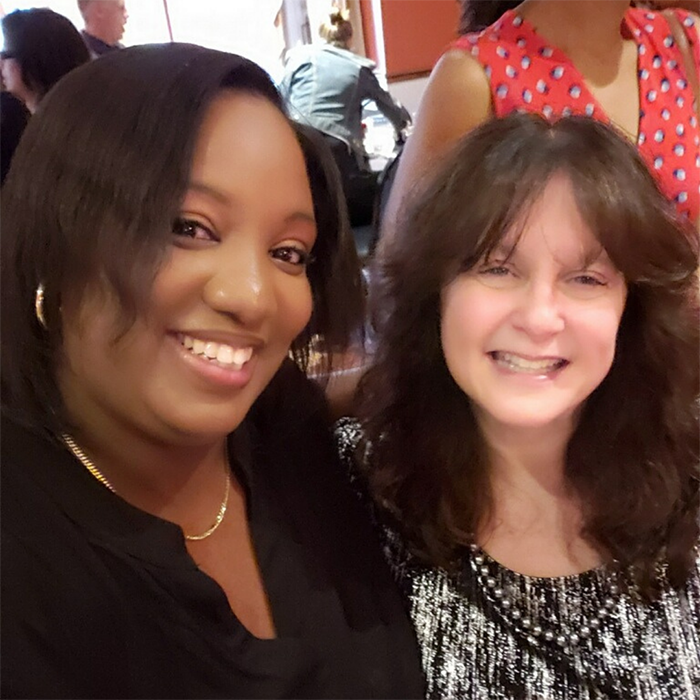
For Evelyn Capistrano and Allison Ceraso, ovarian cancer awareness is deeply personal.
Evelyn is an ovarian cancer survivor. Allison lost her mother to ovarian cancer. Their experiences were different, but both saw a need for clearer conversations about ovarian cancer, family health history, inherited risk, and the information people need to make informed decisions about their health.
As leaders at Digitas Health, they helped turn those experiences into action. In partnership with the National Ovarian Cancer Coalition (NOCC), they championed the development of Silent InHERitance, an awareness initiative designed to break the silence around hereditary ovarian cancer risk.
Their story reflects NOCC’s Awareness pillar and a simple idea: awareness can begin with one conversation.

Evelyn Capistrano: Speaking openly about ovarian cancer
Evelyn’s connection to ovarian cancer came through her own diagnosis.
In Allison’s account of the development of Silent InHERitance, she describes Evelyn as having experienced a delayed ovarian cancer diagnosis. Evelyn later spoke openly about the lack of visible information around ovarian cancer symptoms and risk and questioned why ovarian cancer did not receive the same attention as other cancers.

Her willingness to share her experience helped bring an important problem into focus.
Ovarian cancer can be difficult to recognize. Symptoms such as persistent bloating, pelvic or abdominal pain, difficulty eating or feeling full quickly, and urinary urgency or frequency can be overlooked or mistaken for other conditions. NOCC encourages people to know the risk factors for ovarian cancer and talk with a healthcare provider about persistent or unusual changes.
For Evelyn, sharing her experience became one way to help bring ovarian cancer into conversations where it had too often been absent.
Allison Ceraso: Turning her family’s experience into action
Allison’s connection to ovarian cancer began with her mother, who lived with the disease for 19 years.
Her mother underwent genetic testing and was told the results were negative. After her mother died, a physician encouraged Allison to pursue additional health screening herself. Allison has written about initially approaching that process reluctantly and about how the experience changed the way she thought about inherited risk and the importance of having more information.

Talking about ovarian cancer was not always easy for Allison.
She has described initially avoiding conversations about her own connection to the disease. Meeting Evelyn and watching her speak openly about her experience helped change that.
Their experiences raised a larger question: How many families may have important health information that has never been discussed?
That question became part of the foundation for Silent InHERitance.
How two personal experiences helped shape Silent InHERitance
Evelyn and Allison came to the campaign from different perspectives.
Evelyn understood ovarian cancer as a survivor. Allison understood its impact as a daughter who had lost her mother.
Together, they helped bring patients, advocates, clinicians, and researchers into the development of a campaign focused on conversations about family health history, hereditary risk, and genetic testing.
Today, Silent InHERitance encourages people to understand that ovarian cancer risk can be inherited from either side of the family. It also provides information about ovarian cancer symptoms, BRCA mutations, family health history, genetic testing, and questions people can discuss with their healthcare providers.
Family health history can provide important clues about cancer risk.
Cancer diagnoses among parents, siblings, grandparents, aunts, uncles, and other relatives may help healthcare professionals identify patterns that deserve further discussion.
NOCC’s information about inherited ovarian cancer risk and genetic testing explains how inherited genetic changes can affect risk and why learning more about family history can support informed healthcare decisions.

What could your family history tell you?
Ovarian cancer risk can be inherited from either side of the family. Silent InHERitance offers information and tools to help you understand hereditary risk and start important conversations with your family and healthcare provider.
Why family health history matters for ovarian cancer
Certain cancers can occur more frequently within families.
A family history of ovarian, breast, colorectal, fallopian tube, or primary peritoneal cancer may indicate an increased risk of ovarian cancer. In some families, these cancers are connected to an inherited genetic mutation or hereditary cancer syndrome.
Inherited mutations in genes such as BRCA1 and BRCA2 can increase ovarian cancer risk. These mutations can be inherited from either parent, which means cancer history on both sides of a family matters.
Having a family history or inherited mutation does not mean someone will develop ovarian cancer. Instead, that information can help guide conversations with a healthcare provider or genetic counselor about individual risk and whether genetic testing may be appropriate.
NOCC’s family health history resource offers questions families can use to begin gathering that information.
💡 Start with a conversation
You do not need to understand genetics to begin learning about your family health history. Consider asking:
- Has anyone in our family had cancer?
- What type of cancer did they have?
- How old were they when they were diagnosed?
- Has anyone undergone genetic testing? If so, what were the results?
Even partial information can help you begin a more informed conversation with your healthcare provider.
Why ovarian cancer awareness matters
There is currently no reliable routine screening test that has been shown to detect ovarian cancer early enough to improve long-term survival. That makes understanding symptoms, personal risk, and family health history especially important.
Awareness does not mean diagnosing yourself or assuming that family history determines what will happen.
It means having information that helps you ask better questions.
That can include recognizing symptoms that are persistent or unusual for you, sharing cancer history from both sides of your family, asking whether genetic counseling may be appropriate, or seeking clarification about a previous test result.
For Evelyn and Allison, that is where awareness becomes action.

Breaking the silence can start with one conversation
Silent InHERitance was built around conversations that too often do not happen.
That could mean asking a parent about cancers in previous generations. It might mean telling siblings about genetic test results. It could involve bringing a written family health history to a medical appointment.
Or it might simply mean asking a healthcare provider, “Does anything in my family history affect my ovarian cancer risk?”
The Silent InHERitance campaign brings together information about symptoms, hereditary risk, family health history, and genetic testing to help people start those conversations.
For Evelyn and Allison, helping create that conversation became a way to turn two personal experiences with ovarian cancer into something that could reach other families.
Their Together in TEAL® Mission Village spotlight captures that message:
“What we inherit doesn’t have to define us. But understanding it just might save us.”

Awareness can lead to informed action
Evelyn and Allison’s story shows why ovarian cancer awareness is about more than knowing that the disease exists.
Awareness can help someone recognize that a symptom deserves attention.
It can help a family realize that cancer diagnoses across generations may be important to share with a healthcare provider.
It can help someone ask whether genetic counseling or testing should be part of their healthcare conversation.
And sometimes, it can give people permission to talk about something their family has never discussed before.
That is the purpose behind NOCC’s Awareness pillar: helping people become more informed about ovarian cancer and empowering them to have meaningful conversations about their health.
For Evelyn and Allison, that work grew from their own experiences.
By speaking openly, they helped create an opportunity for others to do the same.

What you can do right now
- Start a family health conversation. Use NOCC’s family health history resources to learn what information may be helpful to gather and share.
- Understand ovarian cancer risk. Review the risk factors for ovarian cancer and talk with your healthcare provider about factors that may apply to you.
- Learn about inherited risk and genetic testing. Explore NOCC’s information about inherited ovarian cancer risk and genetic testing and consider what questions you may want to bring to your healthcare provider.
Topics
- Evelyn Capistrano: Speaking openly about ovarian cancer
- Allison Ceraso: Turning her family’s experience into action
- How two personal experiences helped shape Silent InHERitance
- Why family health history matters for ovarian cancer
- Why ovarian cancer awareness matters
- Breaking the silence can start with one conversation
- Awareness can lead to informed action
- What you can do right now